Why Collectors Still Love the 1941 Wheat Penny
The 1941 Lincoln Wheat Penny holds a special place in American coin collecting. It sits at a calm moment in history, just before the United States entered World War II, and captures the final years of traditional bronze cent production. For collectors, the 1941 wheat penny value offers a rare balance: deep historical context, strong visual appeal, and long-term accessibility across all budgets.
Struck from a 95% copper alloy, the 1941 cent predates the emergency changes that followed only two years later, when steel replaced bronze in 1943. That pre-war composition matters. It gives the coin warmth, weight, and color that later issues simply do not match. Many collectors view 1941 as one of the last “classic-feeling” Wheat cents before wartime necessity reshaped U.S. coinage.

Production numbers were high, yet quality remained excellent. The United States Mint struck the coin at three facilities, each contributing to the series’ appeal:
Philadelphia (no mint mark) — approximately 887 million pieces
Denver (D) — about 15.3 million pieces
San Francisco (S) — about 15.2 million pieces
This wide output explains why circulated examples remain easy to find today. At the same time, lower mintages from Denver and San Francisco add structure and challenge to set building, especially in higher grades.
Pre-War Bronze Appeal and Visual Character
Collectors are drawn to the look of the 1941 Wheat Penny. Freshly struck examples display rich red luster, sharp details on Lincoln’s portrait, and clean definition in the wheat stalks on the reverse. That combination is harder to find on later wartime and post-war cents, which often show weaker strikes or darker surfaces.
Color plays a central role in value. Like all bronze cents, 1941 pennies are graded by color:
BN (Brown) — most common, especially in circulated grades
RB (Red-Brown) — partial original luster remains
RD (Red) — full mint color, strongest premiums
Red examples often sell for ten times more than brown coins in the same grade. This difference explains why collectors inspect surfaces carefully, ensure them via the best free coin identifier app and avoid coins that were cleaned or artificially brightened.
Strike quality also matters. Many 1941 cents show strong detail, but standout pieces feature crisp separation in the wheat stalk lines. Coins with exceptional reverse sharpness can earn informal “Full Steps”–style recognition among specialists, pushing premiums significantly higher in MS67 and above.
Affordability Meets History
Another reason the 1941 Wheat Penny remains popular is its low entry cost, simply found in flea markets and checked via the coin finder. Circulated coins in grades like G-4 or VF30 trade for only a few cents above face value, making them ideal for new collectors or type sets.
Typical market ranges look like this:
G-4 to VF30: $0.15–$0.75 depending on mint
Lower uncirculated (MS63 RB/RD): $1–$5
Choice red examples: premiums climb quickly with grade
This pricing structure allows collectors to start small and upgrade over time. Few classic U.S. coins offer that flexibility while still carrying meaningful historical weight.
The 1941 cent also resonates emotionally. It represents everyday money from a world on the edge of change, a familiar object carried just before wartime reshaped daily life. That connection keeps demand steady decade after decade.
Condition Rarity: Where the 1941 Wheat Penny Shines
High mintages kept the 1941 Wheat Penny affordable in circulated grades, but they did not guarantee survival in top condition. Most coins entered daily use immediately. Friction, humidity, and storage methods erased original luster on the vast majority. That reality explains why gem-quality examples command strong premiums today.
Collectors focus on three factors at the upper end: surface preservation, strike sharpness, and original color. Coins that retain full red (RD) luster without spots or hairlines are scarce, especially from branch mints.
How Grade Transforms Value
The jump from average uncirculated to gem is dramatic. A single grade point can multiply value several times over.
Mint | VF30 Value | MS65 RD | MS67+ RD |
1941 (P) | ~$0.25 | $20–$30 | $300–$800 |
1941-D | ~$0.50 | $35–$50 | $1,000–$10,000 |
1941-S | ~$0.75 | $40–$60 | $800–$3,000 |
The Denver issue leads the market in top grades. Its smaller mintage and often weaker strikes make flawless survivors rare. One 1941-D graded MS68 RD by Professional Coin Grading Service realized $10,350, driven by pristine surfaces and vibrant, original color seldom seen on pre-war cents.
What Advanced Collectors Look For
At MS65 and above, minor flaws matter. Successful buyers inspect:
uninterrupted cartwheel luster across both sides
clean fields around Lincoln’s cheek and jaw
sharp wheat stalk lines without flatness
natural red or red-brown color, not artificial brightness
Coins that look “too shiny” often hide past cleaning. Those rarely hold value over time.
Certification by Numismatic Guaranty Company or PCGS anchors prices at this level. Slabbed examples sell consistently; raw coins face skepticism, even when attractive.
Color Stability and Long-Term Appeal
The appeal of the 1941 Wheat Penny also comes from its stability. Pre-war bronze ages predictably when stored well. Original red can mellow into attractive red-brown toning without collapsing into dull brown. That slow, graceful change supports long-term demand among collectors who value eye appeal as much as technical grade.
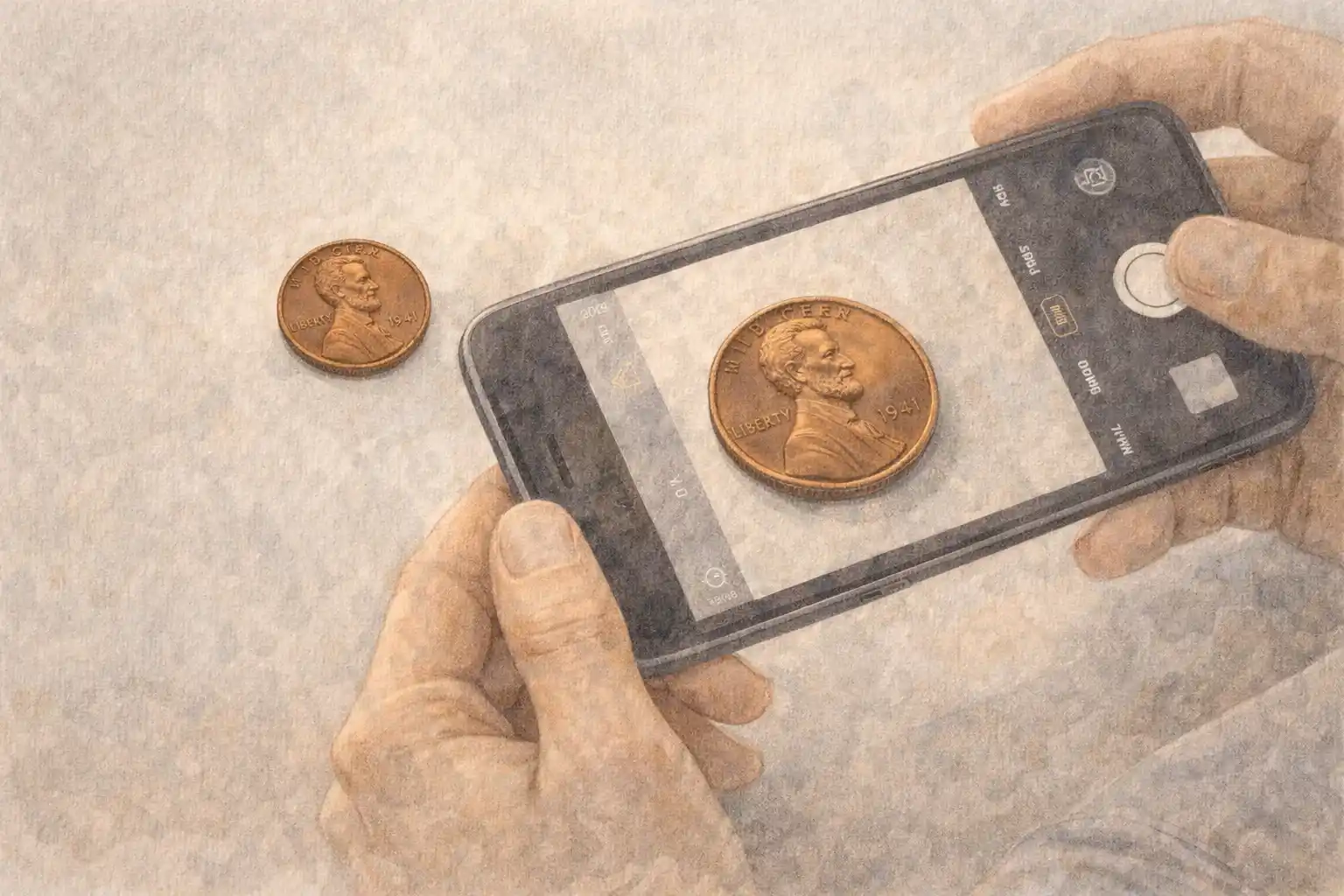
For quick screening of raw finds—especially in bulk lots—some collectors use Coin ID Scanner to confirm year, mint, composition, and basic specs before committing to grading costs. It helps narrow candidates worth closer inspection. Condition rarity is the engine behind the 1941 penny’s strongest prices.
Errors, Varieties, and Long-Term Appeal
Beyond grade and color, the 1941 Wheat Penny attracts collectors through a focused set of mint-made errors and varieties. These pieces add scarcity to an otherwise available date and reward careful inspection rather than bulk buying.
Recognized Errors and Varieties That Matter
The most desirable errors from 1941 share one trait: clear diagnostics. Ambiguous marks rarely hold value. Documented varieties do.
Doubled Die Obverse (FS-101)
Shows visible offset in the date and parts of the motto. Rounded, separated impressions distinguish it from mechanical doubling. Market ranges typically fall between $100 and $500, rising with conditions.Repunched Mint Marks (RPM)
Seen mainly on Denver issues, where the “D” shows remnants of an earlier punch. Values often land between $50 and $300, with sharper examples commanding more.1941-D/S Overmint
A scarce minting anomaly where traces of an underlying S appear beneath the D. These pieces attract strong specialist interest and can exceed $1,000 when verified.
These errors emerged during a period of expanding production, when die preparation accelerated and quality control occasionally slipped. Survivors remain limited, especially with clean surfaces.
Authentication and Smart Screening
Error coins demand verification. Many claimed varieties turn out to be damage or strike-related artifacts. Professional attribution by Professional Coin Grading Service or Numismatic Guaranty Company protects buyers and anchors resale value.
For preliminary checks, collectors often rely on Coin ID Scanner. Photo identification helps confirm year, mint, composition, weight, and diameter, making it easier to flag genuine 1941 candidates and reject mismatches before deeper analysis.
Investment and Set-Building Strength
The 1941 Wheat Penny remains attractive as a long-term hold. Entry costs stay low, while top grades show consistent appreciation. In gem condition, annual growth in the 8–12% range has outpaced inflation over extended periods, especially for red Denver and San Francisco coins.
Collectors value this issue for practical reasons:
affordable access to pre-war U.S. bronze
steady demand across all grade levels
clear upgrade paths from circulated to gem
strong liquidity within the Wheat cent series
Its connection to the final years before wartime change adds narrative appeal that newer issues cannot replicate.
Preservation Makes the Difference
Storage choices influence value over time. Original surfaces matter more than brightness.
Best practices include:
albums or holders free of PVC
stable environments with low humidity
minimal handling, ideally by edges
Proper care allows color to age naturally rather than degrade.
Why the Love Endures
Collectors continue to favor the 1941 Wheat Penny because it delivers on every level. It is historical without being rare, affordable without being dull, and familiar without being forgettable. Add condition rarity and a handful of legitimate errors, and the result is a coin that remains relevant generation after generation.