The Strange Market Logic Behind MS65 Coin Prices
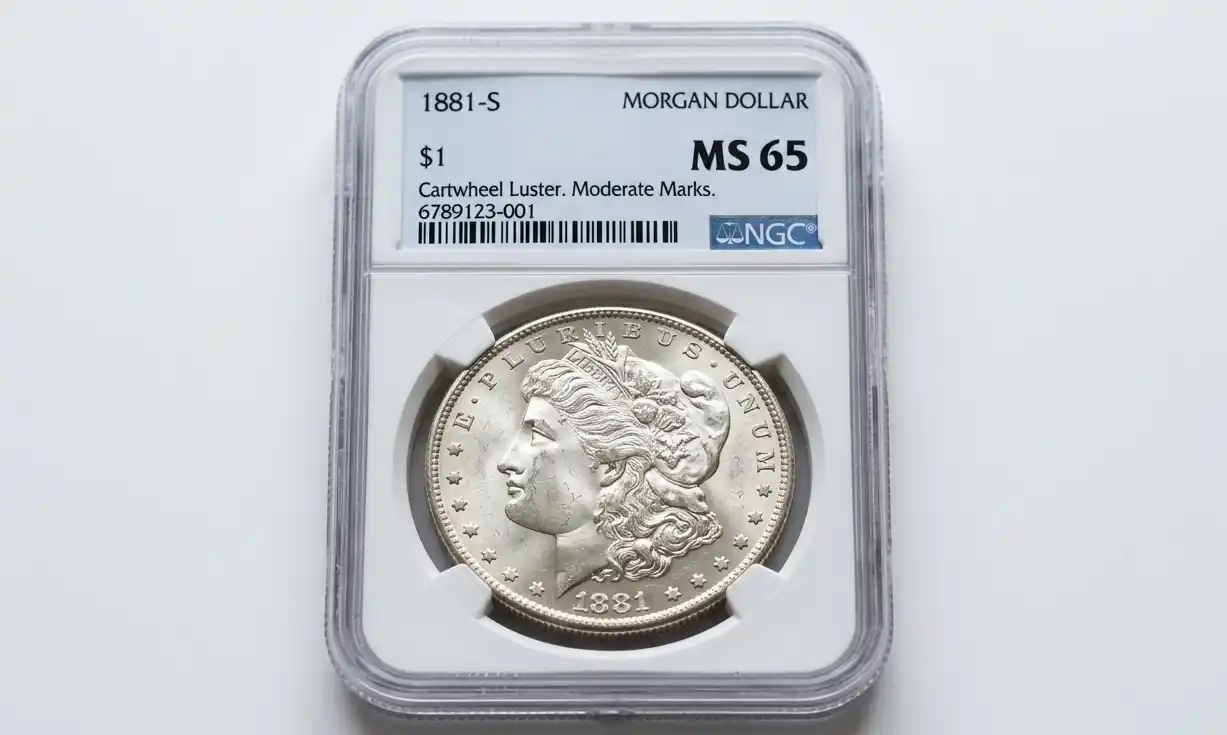
The MS65 coin grade demonstrates significant price discrepancies in the open market.
Market participants often observe two items sharing an identical technical grade while possessing vastly different final transaction prices.
Understanding such divergence requires detailed analysis of technical parameters rather than reliance on a single alphanumeric designation.
Advanced buyers prioritize physical condition metrics that exist outside the standardized grading scale.
Mechanical Factors Affecting Valuation
Strike intensity determines the initial clarity of design elements on the surface of the specimen.
Weakly struck pieces fail to capture fine details, leading to lower liquidity and decreased market value.
Full strikes exhibit sharp, complete details on every element of the design.
Variables influencing strike quality:
Die pressure
Planchet thickness
Die spacing
Metal alloy hardness
Impact of die states on surface finish:
Early die usage produces crisp, high-relief images with deep, mirrored fields.
Late die usage causes loss of detail, resulting in "mushy" or soft designs that negatively impact the overall appraisal.
Detailed Surface Quality Assessment
Surfaces define the Gem classification.
Minor abrasions, commonly known as bag marks, occur during the minting and storage process.
Presence of these marks in primary focal areas drastically reduces the potential price.
Defect type | Severity level | Price impact |
Micro-hairlines | Low | -$50 |
Rim dings | Medium | -$150 |
Surface scratches | High | -$400 |
Mint-made defects | Variable | Negligible |
Clean, undisturbed fields remain the primary driver for premium pricing within the MS65 category.
Statistical Market Analysis
Investors track historical price changes via a coin identifier app free to identify undervalued assets.
Below exists the average market value progression for a standard 1-dollar precious metal coin in MS65 condition.
2024: $1350.
2025: $1480.
2026: $1620.
Professional market data indicates a 9% average annual appreciation for top-tier specimens.
High-quality examples consistently outperform average pieces in the same grade tier.
Role of Patina and Toning
Oxidation layers on the surface of a coin form what collectors identify as patina.
Uniform, aesthetically pleasing toning increases buyer interest significantly.
Spotty, multi-colored, or corrosive oxidation layers typically decrease market appeal.
Factors determining toning quality:
Storage environment humidity
Metal composition stability
Exposure to sulfur compounds
Duration of contact with storage materials
Comparative Physical Properties of 1-Dollar Assets
Physical metric | Value specification |
Nominal diameter | 38.1 mm |
Total mass | 26.73 grams |
Metal content | 24.05 grams |
Purity standard | 90% alloy |
These specifications remain constant across all examined specimens of this series.
Price Divergence Logic
Market logic dictates that a 200% price gap between identical MS65 coins stems from objective quality differences.
Buyers pay for the absence of distractions, sharp luster, and pristine surfaces.
Decision flow for asset acquisition:
Luster quality + Surface cleanliness → Premium market value.
Auction records for Morgan 1-Dollar coins:
High-end MS65 specimen: $4500.
Low-end MS65 specimen: $2100.
Disparity between these two points highlights the importance of granular inspection beyond the holder grade.
Production Anomalies
Errors occurring during the manufacturing process create unique categories of market value.
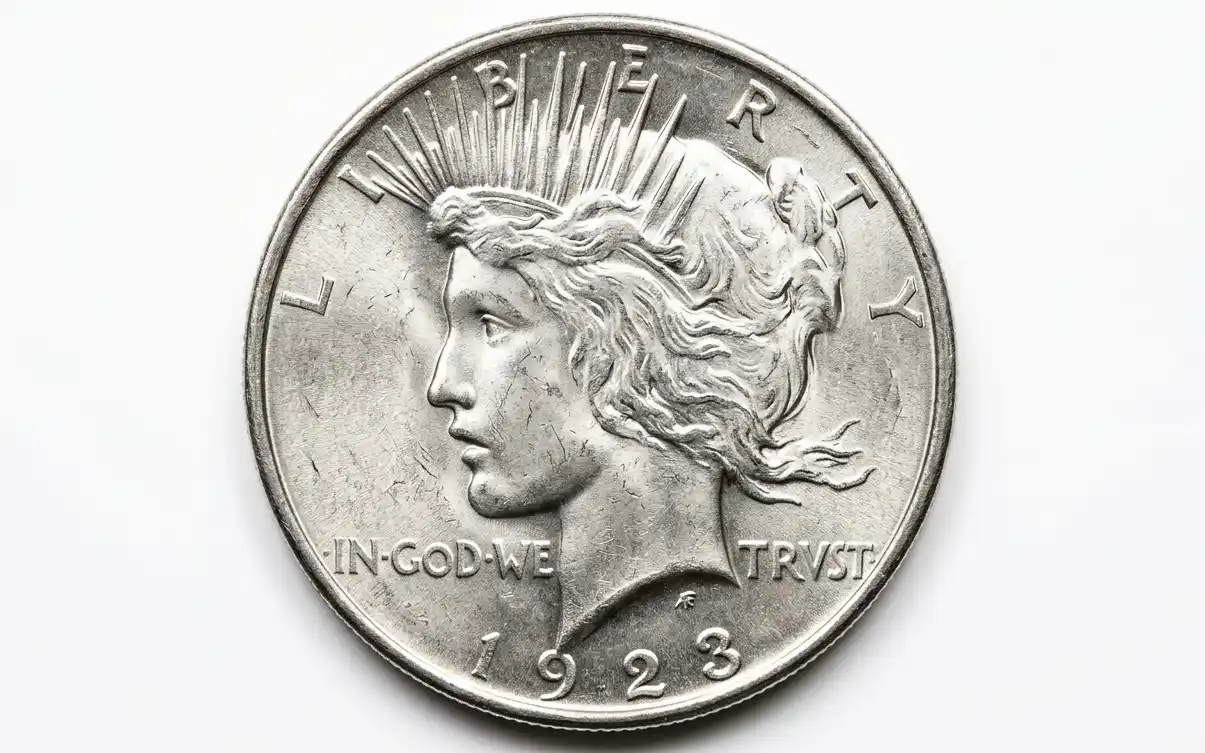
Double Die
Mechanical doubling on the design creates an offset impression.
Increased interest from specialists drives prices 35% higher than standard strikes.
Off Center
Incorrect placement of the planchet relative to the die causes the design to shift.
Value multipliers reach 45% when all major elements remain visible.
Investment Strategy and Portfolio Management
Professional collectors focus on "PQ" (Premium Quality) items.
Assets with potential for grade upgrades command higher initial entry prices.
Portfolio growth indicators:
Population reports scarcity
Auction provenance consistency
Liquidity of the specific series
Certification Impact
Professional grading services provide a baseline for market confidence.
Encapsulation protects the asset from environmental degradation.
Major services utilize rigorous protocols to ensure grading consistency across all submitted pieces.
Service provider criteria:
Physical condition verification
Authenticity confirmation
Surface treatment detection
Institutional investors rely exclusively on top-tier certification services for asset allocation.
Supply and Demand Dynamics
Limited supply of high-grade assets maintains upward price pressure.
Common-date coins require superior eye appeal to differentiate from mass-market offerings.
Key-date coins command high premiums regardless of minor surface distractions.
Market demand fluctuates based on broader macroeconomic trends and precious metal price volatility.
Practical Inspection Methodology
Buyers must evaluate every potential purchase under controlled lighting.
The coin identification reveals hidden surface issues that photographs obscure.
Tilting the coin under a single light source helps identify subtle hairlines or bag marks.
Essential inspection steps:
Verify holder integrity
Check for artificial toning
Confirm die variety attribution
Compare luster intensity against known examples
Acquiring coins based solely on the holder grade exposes the buyer to unnecessary risk.
Comprehensive technical review ensures long-term asset value retention.
Specimens exhibiting exceptional characteristics consistently provide the highest returns in the numismatic sector.